
Go beyond the visit with articles on Asian elephant behavior, habitats in Thailand, and current welfare conversations in Southeast Asia. We share updates from around the sanctuary and thought-starters for responsible wildlife travel.
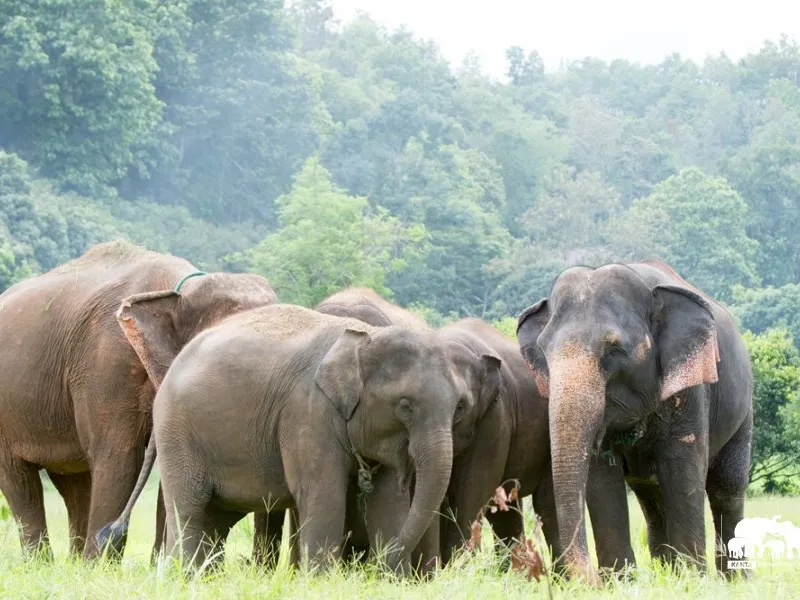
There are two species of elephant: African and Asian. Asian elephants are divided into four sub-species, Sri Lankan, Indian, Sumatran and Borneo. Thai elephants are classed as Indian elephants. Thai elephants have slight differences from other sub-species of Indian elephants. They are smaller, have shorter front legs, and a thicker body than their Indian counterparts. Elephants are herbivores, consuming ripe bananas, leaves, bamboo, tree bark, and other fruits. Eating occupies 18 hours of an elephant's day. They eat 100-200 kilograms of food per day. A cow (female) will eat 5.6 percent of her body weight per day. A bull (male) will eat 4.8 percent. Thus a 3,000 kilogram cow will consume 168 kg per day, a 4,000 kg bull 192 kg per day. As elephants can digest only 40 percent of their daily intake, the result is dung amounting to 50-60 kg daily. As elephants will not eat in unclean surroundings fouled by dung, their instinct is to roam to a new area.
Because of their diet, the natural habitat of the Thai elephant are in tropical forests which are found in the northern and western parts of Thailand: Mae Hong Son, Chumphon, and the border near Burma (Huai Kha Khaeng Wildlife Sanctuary, Erawan Falls National Park), Petchabun range, Dangrek Range, and peninsular Thailand (Ranong, and Trang). Thailand formerly was 90 percent forested. Illegal logging and agriculture has reduced forest cover dramatically. Forest cover shrank to 31.6 percent in 2015. This has meant death to the Thai elephant, resulting in the plummeting numbers of the animal, placing them on the endangered species list. On Elephant Day 2017, the Department of National Parks announced that the number of wild elephants was rising 7-10 percent. Areas that had seen the most marked increase in wild elephants were the western forest in Thungyai Naresuan Wildlife Sanctuary and the eastern forest in Dong Phayayen-Khao Yai forest complex
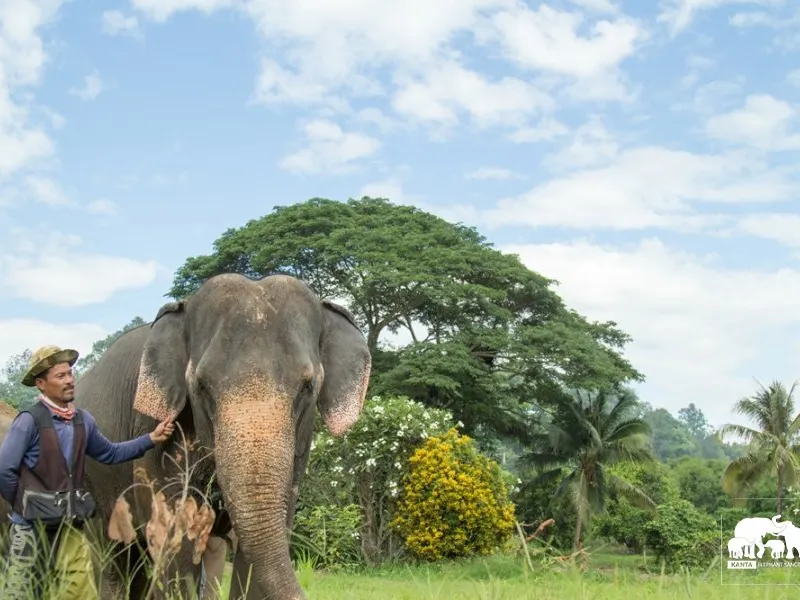
In Thai society elephants have played a substantial role in manual labour, war, royal iconography, and the tourism industry. For thousands of years, elephants were captured and trained to be a form of transport and heavy labour. When logging in Thailand was still legal, they hauled heavy logs through forests, which in turn gave many Thai people jobs. In recorded Thai history, during the reign of King Ramkhamhaeng the Great of Sukhothai, Thais used to hunt and trade elephants. Known for their strength and intelligence, elephants were used as war elephants since the days of Alexander the Great. They were referred to as a warm-blooded armoured-tank. Each elephant has a distinctive personality. Mostly male elephants that are aggressive yet tameable were selected to be war elephants. They were trained with lightly pricked spear on their skin in order for them to move forward. The training was conducted in a loud environment of shouting and drum sounds to accustom them to the sounds of warfare. Elephant duel between Siam and Burma Thai royals and elephants established a relationship over thousands of years. The first recorded Thai elephant was in the stone inscription of King Ramkhamhaeng the Great of Sukhothai. In this inscription he mentioned being nineteen and said his elephant, Bekhpon, advanced their attack on Khun Sam Chon to protect his father, while his father's soldiers fled in fear. Chao Praya Prabhongsawadee was the elephant of King Naresuan of Thailand that came out triumphant in the elephant duel (Thai: ยุทธหัตถี) between the King of Burma and King Naresuan during the war with the Burmese. For a very long time, it was a law that when a white elephant was found and a tradition that when an elephant with good build was found, it was to be presented as property to the King of Thailand. The Thai sacred and royal symbol was the white elephant (chang pueak or chang samkan). They are not albinos but are genetically different. White elephants are not white, they are a dusky pinkish grey. Phra Savet Adulyadej Pahon was a white elephant that belonged to Thailand's King Bhumibol Adulyadej. Since the logging industry became illegal, elephants trainers (mahouts) have had to find other ways to feed their elephants, most of them turning to the entertainment industry and tourism. Most mahouts took their elephants to Bangkok, roaming the streets with baskets of fruits for the tourists to buy and feed the animal. Elephants now have to beg for food and perform tricks in exchange for money. This lowers the status of elephants. On 17 June 2010, laws were passed for elephant protection, making these acts illegal. Elephants in the entertainment industry are trained to follow over forty commands; they can kick soccer balls, participate in talent shows, and use their trunks to paint and lift objects and sometimes people.
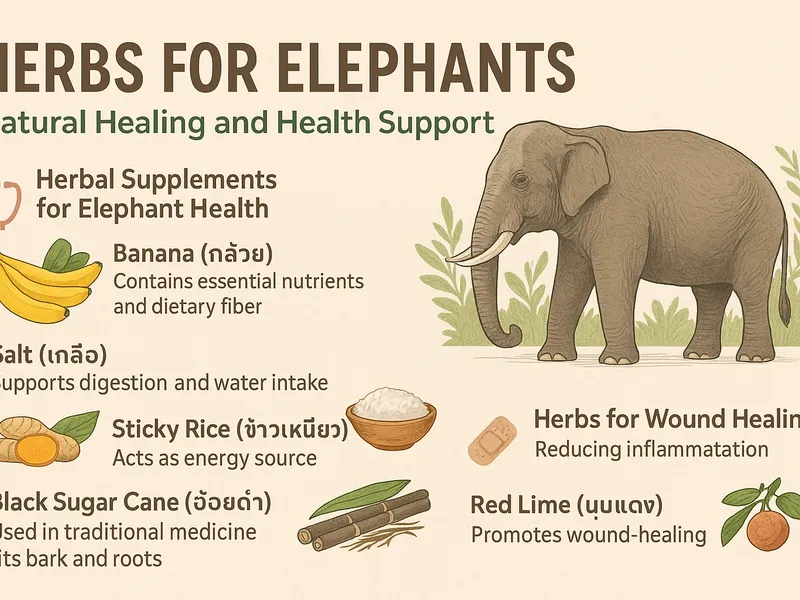
Elephants are not only majestic creatures but also an important part of Thailand’s cultural and natural heritage. To keep them healthy and strong, traditional herbal medicine plays a vital role. Many local herbs have been used for centuries to help improve digestion, heal wounds, and eliminate parasites naturally — ensuring elephants live longer, healthier lives. Herbal Supplements for Elephant Health 1. Banana (กล้วย) Bananas are rich in potassium, magnesium, phosphorus, and vitamin C — essential nutrients that help maintain many body functions. The fruit also contains dietary fiber and pectin that support the digestive system and increase intestinal health. 2. Salt (เกลือ) Salt is an important source of sodium, which supports digestion and encourages elephants to drink more water. It also helps balance electrolytes in the body, preventing dehydration. 3. Tamarind (มะขามเปียก) Tamarind has a mild laxative effect that helps elephants defecate more easily, reducing constipation. Rich in vitamins and minerals, it also helps strengthen the immune system. 4. Sticky Rice (ข้าวเหนียว) Sticky rice provides a great energy source, helping elephants stay active and strong throughout the day. 5. Black Sugar Cane (อ้อยดำ) Various parts of the sugar cane — such as the trunk, bark, and roots — are used in traditional herbal medicine. They help boost energy and contribute to overall vitality. Herbs for Wound Healing 1. Turmeric (ขมิ้น) Known for its powerful anti-inflammatory and antibacterial properties, turmeric helps accelerate wound healing and prevent infections. 2. Betel Leaf (ใบพลู) Betel leaves have antiseptic and healing effects, often combined with turmeric for natural skin treatment. 3. Red Lime (ปูนแดง) When mixed with turmeric and betel leaf, red lime enhances the wound-healing effect and helps soothe irritated skin. How to Use: Chop turmeric and betel leaves into small pieces, add red lime, and mix together to create a herbal paste. Apply it to wounds or inflamed areas to reduce swelling and speed up healing. Herbal Treatment for External Parasites Snuffbox Bean (เครือสะบ้า) This herb is traditionally used to scrub and bathe elephants, effectively removing ticks and fleas. The process involves cutting the bean into pieces, crushing finely, soaking in water, and rubbing on the elephant’s skin to produce foam. It provides a natural, chemical-free way to eliminate parasites and maintain clean, healthy skin. Conclusion Using natural herbs for elephant care is an eco-friendly and culturally rooted practice. These herbal remedies not only help maintain the elephants’ physical health but also preserve traditional wisdom passed down through generations in Thailand. Whether for digestion, wound care, or parasite removal, herbal medicine offers a safe and sustainable path to elephant wellness.
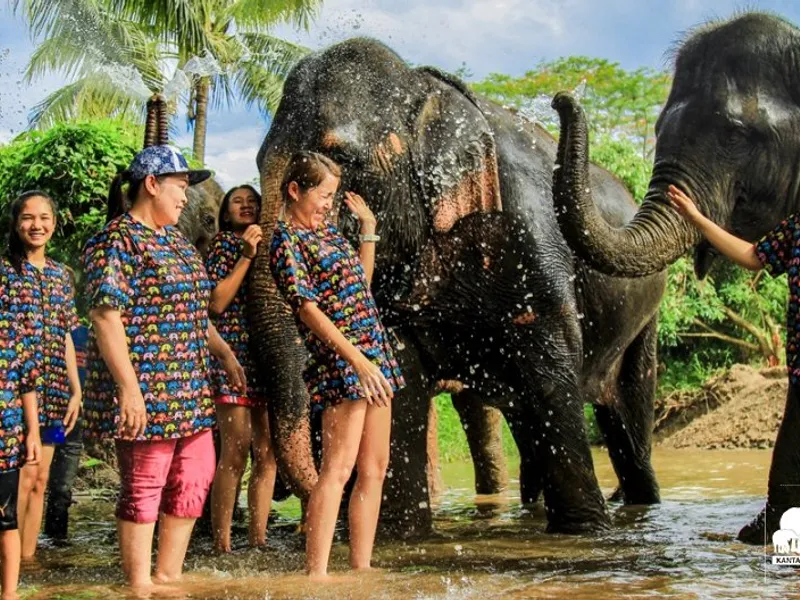
The welfare of captive elephants is a topic of intense debate among animal managers, conservationists, scientists, the general public, animal welfare/rights groups and the media. Common concerns, especially on welfare, raised about elephant tourism in particular are complex in their nature and impact, and call for urgent scientific evaluation as well as for realistic solutions to ensure the sustainable and ethical management of captive elephants in the future. The interaction between elephants and people has a long-standing cultural and commercial history and elephants continue to play a role in the economy. According to the International Union for the Conservation of Nature (IUCN) there are approximately 13,000 Asian elephants in captivity used for tourism, logging and transport throughout the Asian elephant range countries (AsERSM, 2006). The use of elephants in tourism camps is increasing; an estimated 2,700 elephants from an estimated total captive population of 4,500 are used for such purposes in Thailand (Pintawong et al., 2014). For the tourist camps in ASEAN (Association of Southeast Asian Nations) countries, there are currently no acknowledged and/or widely used guidelines for best practices for the management and care of elephants. This has resulted in a large number of facilities operating with an insufficient capacity to manage captive elephants. Such facilities are extremely vulnerable to criticism, creating false assumptions about proper captive elephant management and undermining the reputation of good facilities. Recognizing the urgent need to create more awareness about both the problems and the possible solutions as well as provide recommendations to improve health care and management practices for captive elephants in the ASEAN countries, a group of regional elephant specialists, veterinarians, researchers and conservationists formed an ASEAN Captive Elephant Working Group (ACEWG) in June 2015.
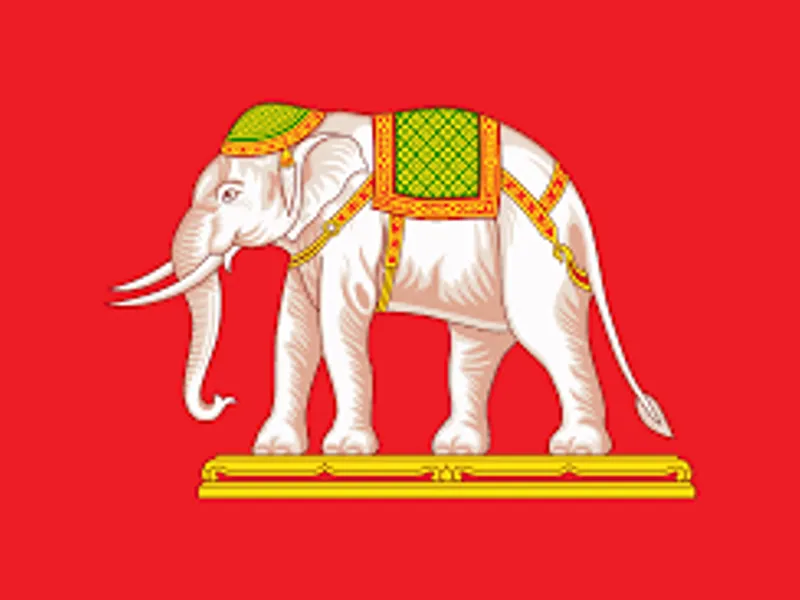
Cultural and Historical Role Thai elephants are depicted in Buddhist paintings and were once featured on the national flag. They played an important role in historical wars, especially in elephant duels (royal or military commanders fighting on elephants), regarded as honorable combat . Elephants were central to royal ceremonies and have been a national symbol for centuries. Then and Now Historically vital in the logging industry until 1989, when the government banned nationwide logging contracts. Today, elephants are significant in tourism, conservation projects, and cultural events . Elephant motifs appear in sports logos and provincial emblems (e.g., Chiang Mai, Surin, Suphanburi). Biological Characteristics African vs. Asian elephants: African: taller (3–4 m), large ears, concave back, both sexes may have tusks, heavier (4–7 tons). Asian: shorter (2–3.5 m), small rounded ears, convex back, tusks usually in males only, lighter (3–5 tons) . Elephants have a highly developed hippocampus and limbic system, supporting long-term memory and complex emotions. Musculoskeletal system: strong leg muscles, lightweight reticular bones (16.5% of body weight), cushion pads on feet for shock absorption . Sensory traits: Ears help regulate body temperature and detect sounds up to 10 km. The trunk has ~150,000 muscles, enabling strength and precision. Eyes are relatively small, with poor vision and partial color blindness . Healthcare and Herbs First aid for sick elephants is provided by veterinarians; severe cases are referred to the Elephant Hospital in Lampang. Traditional herbal remedies include betel leaf, turmeric, tamarind, banana, rice, salt, moonseed, black sugar cane, aloe vera, and pineapple root for health support and wound healing .