Elephants are not only majestic creatures but also an important part of Thailand’s cultural and natural heritage. To keep them healthy and strong, traditional herbal medicine plays a vital role. Many local herbs have been used for centuries to help improve digestion, heal wounds, and eliminate parasites naturally — ensuring elephants live longer, healthier lives.
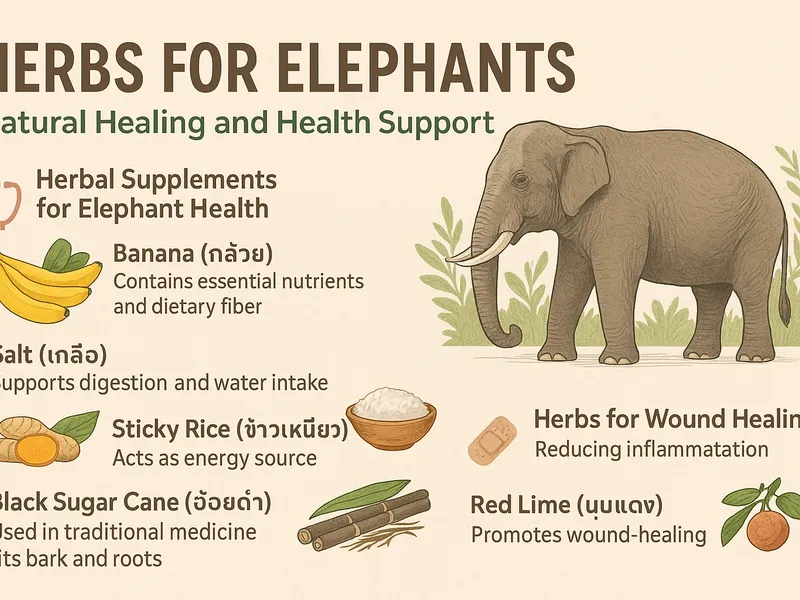
Herbal Supplements for Elephant Health
1. Banana (กล้วย)
Bananas are rich in potassium, magnesium, phosphorus, and vitamin C — essential nutrients that help maintain many body functions. The fruit also contains dietary fiber and pectin that support the digestive system and increase intestinal health.
2. Salt (เกลือ)
Salt is an important source of sodium, which supports digestion and encourages elephants to drink more water. It also helps balance electrolytes in the body, preventing dehydration.
3. Tamarind (มะขามเปียก)
Tamarind has a mild laxative effect that helps elephants defecate more easily, reducing constipation. Rich in vitamins and minerals, it also helps strengthen the immune system.
4. Sticky Rice (ข้าวเหนียว)
Sticky rice provides a great energy source, helping elephants stay active and strong throughout the day.
5. Black Sugar Cane (อ้อยดำ)
Various parts of the sugar cane — such as the trunk, bark, and roots — are used in traditional herbal medicine. They help boost energy and contribute to overall vitality.
Herbs for Wound Healing
1. Turmeric (ขมิ้น)
Known for its powerful anti-inflammatory and antibacterial properties, turmeric helps accelerate wound healing and prevent infections.
2. Betel Leaf (ใบพลู)
Betel leaves have antiseptic and healing effects, often combined with turmeric for natural skin treatment.
3. Red Lime (ปูนแดง)
When mixed with turmeric and betel leaf, red lime enhances the wound-healing effect and helps soothe irritated skin.
How to Use:
Chop turmeric and betel leaves into small pieces, add red lime, and mix together to create a herbal paste. Apply it to wounds or inflamed areas to reduce swelling and speed up healing.
Herbal Treatment for External Parasites
Snuffbox Bean (เครือสะบ้า)
This herb is traditionally used to scrub and bathe elephants, effectively removing ticks and fleas. The process involves cutting the bean into pieces, crushing finely, soaking in water, and rubbing on the elephant’s skin to produce foam. It provides a natural, chemical-free way to eliminate parasites and maintain clean, healthy skin.
Conclusion
Using natural herbs for elephant care is an eco-friendly and culturally rooted practice. These herbal remedies not only help maintain the elephants’ physical health but also preserve traditional wisdom passed down through generations in Thailand. Whether for digestion, wound care, or parasite removal, herbal medicine offers a safe and sustainable path to elephant wellness.