Cultural and Historical Role
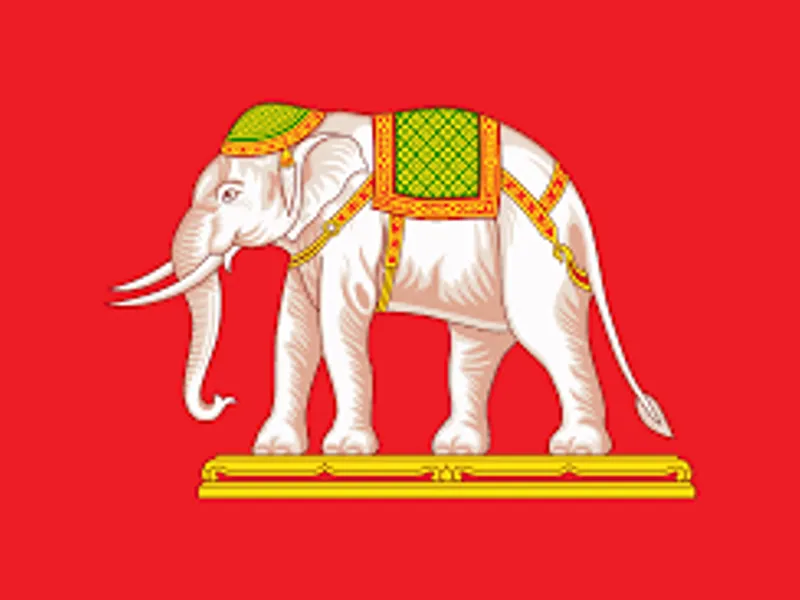
Thai elephants are depicted in Buddhist paintings and were once featured on the national flag.
They played an important role in historical wars, especially in elephant duels (royal or military commanders fighting on elephants), regarded as honorable combat .
Elephants were central to royal ceremonies and have been a national symbol for centuries.
Then and Now
Historically vital in the logging industry until 1989, when the government banned nationwide logging contracts.
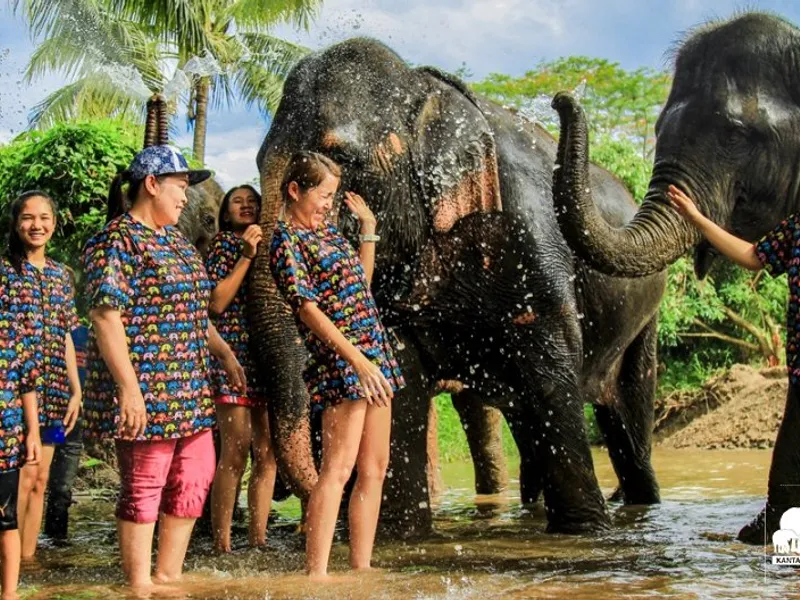
Today, elephants are significant in tourism, conservation projects, and cultural events .
Elephant motifs appear in sports logos and provincial emblems (e.g., Chiang Mai, Surin, Suphanburi).
Biological Characteristics
African vs. Asian elephants:
African: taller (3–4 m), large ears, concave back, both sexes may have tusks, heavier (4–7 tons).
Asian: shorter (2–3.5 m), small rounded ears, convex back, tusks usually in males only, lighter (3–5 tons) .
Elephants have a highly developed hippocampus and limbic system, supporting long-term memory and complex emotions.
Musculoskeletal system: strong leg muscles, lightweight reticular bones (16.5% of body weight), cushion pads on feet for shock absorption .
Sensory traits:
Ears help regulate body temperature and detect sounds up to 10 km.
The trunk has ~150,000 muscles, enabling strength and precision.
Eyes are relatively small, with poor vision and partial color blindness .
Healthcare and Herbs
First aid for sick elephants is provided by veterinarians; severe cases are referred to the Elephant Hospital in Lampang.
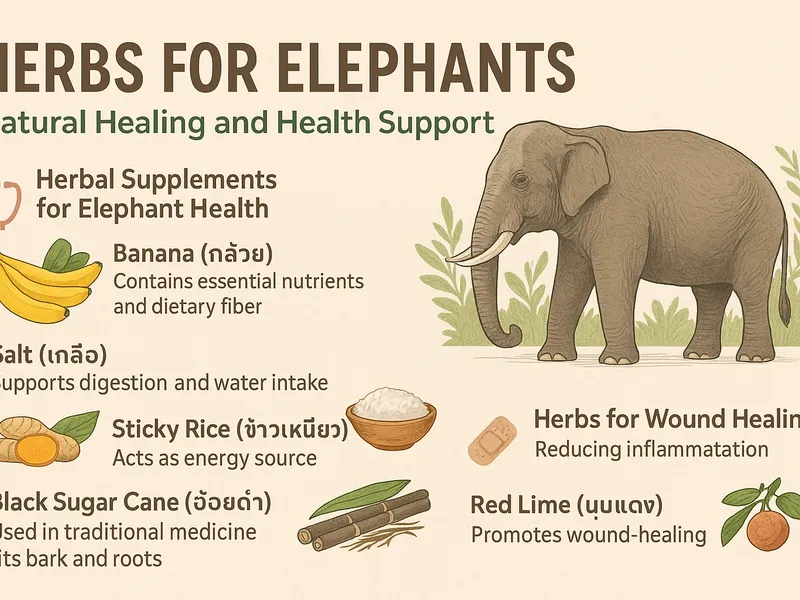
Traditional herbal remedies include betel leaf, turmeric, tamarind, banana, rice, salt, moonseed, black sugar cane, aloe vera, and pineapple root for health support and wound healing .